

For many, the Upper Delaware and Catskill region is a refuge from the hectic pace of life in the working world. For anglers especially, it is an opportunity to fully immerse mind, body and spirit in the unique rhythms of the river system. The elemental act of angling enables this escape in a way nothing else can.
"Reel: A Day on the River," is an inspirational film about the tradition and culture of fly-fishing in the East. It highlights the responsibility we have to protect resources like the Upper Delaware River for future generations.
Popular Posts
-
 In its simplest form, etiquette is nothing more than doing the right thing at the right time for a particular situation. Some of these ru...
 -
WASHINGTON – The U.S. Environmental Protection Agency (EPA) is launching a web-based discussion forum to gather public input on how the...
-
ASMFC Atlantic Menhaden Board Initiates Addendum to Increase Abundance and Spawning Stock Biomass Arlington, VA – The Commission’s Atlanti...
-
Alexandria, VA – The Commission’s Atlantic Striped Bass Management Board has initiated development of Draft Addendum III with the goals of r...
-
When you hire a guide on the Upper Delaware or anywhere else, don't make assumptions, check to see if your guide is licensed. On the...
-
Beginning February 1, 2014 the New York State Department of Environmental Conservation (DEC) is decreasing sporting license fees. This pric...
-
 It’s been an excellent water year so far and that's resulted in some very good drift boat fishing on the Upper Delaware. The Main Ste...
 -
Bill confirms outdoor recreation industry is a significant economic drive The bill, known as the Outdoor REC Act, passed the House...
-
 Summer Trout Fishing on the Upper Delaware River It’s been an excellent water year so far and that's resulted in some very good fish...
 -
Low, turbid water poses a risk to spawning trout Anglers: please don't fish the Esopus Creek from the Shandaken Portal to the Asho...
Monday, August 06, 2012


Thursday, August 02, 2012
Spiny Water Flea Confirmed in Lake George
New York State Will Work with Partners to Implement Lake Champlain Task Force Recommendations
The presence of the spiny water flea, an aquatic invasive species, was confirmed in Lake George, the New York State Department of Environmental Conservation announced today."DEC has worked with its partners on the Lake Champlain Basin Task Force to stop and slow the spread of the spiny water flea," DEC Commissioner Joe Martens said. "The discovery of spiny water flea in Lake George is not welcome news and DEC's efforts to slow the spread of this and other invasive species will continue."
Earlier this week the Lake Champlain Basin Aquatic Invasive Species Rapid Response Task Force released seven recommendations to slow the spread of spiny water flea into Lake Champlain, which includes redirecting the flow of the Champlain Canal into the Hudson River and furthering a feasibility study for a hydraulic barrier between the Champlain Canal and Lake Champlain.
"DEC fully supports the recommendations of the Task Force and will work with the state of Vermont and our other partners to implement the Task Force's recommendations," Commissioner Martens said. "Boaters and anglers also have a major role in slowing the spread of invasive species. All boating, fishing and recreation equipment must be cleaned and disinfected, to prevent spreading invasive species to other water bodies."
The Task Force is made up of representatives from New York state, Vermont and Canada. The Task Force's report recognizes that the closure of the Champlain Canal and the Glens Falls Feeder Canal is not technically, legally or economically feasible.
The discovery of spiny water flea in Lake George provides another pathway for the invasive species to enter Lake Champlain via the LaChute River. Lake George is not connected to the State Canal System.
The presence of spiny water flea was confirmed through sampling efforts by the Lake George Association on Tuesday, July 31. The samples were taken to the Darrin Fresh Water Institute where four spiny water fleas were identified.
"Right now the Commission's top priority is invasive species control and management, and we will work with our many partners on determining the extent of this population," Dave Wick, Executive Director of the Lake George Park Commission, said. "The Commission is currently developing a comprehensive invasive species prevention plan for Lake George, with the goal of preventing any new invasive occurrences from entering the lake."
The possible presence of the spiny water flea was first reported on Friday, July 27 by an invasive species steward at DEC's Mossy Point Boat Launch near the north end of the lake. A fisherman had reported having a clump of small organisms on his fishing line after spending time trolling the waters off Mallory Island along the east shore of the lake.
The steward took a sample and provided it to the Lake George Association, who passed it on to the Darrin Fresh Water Institute. After the organisms were identified as spiny water fleas the Lake George Association sampled the waters off Mallory Island and further confirmed its presence.
The invasive pest was previously confirmed in the Great Sacandaga Lake in 2008, Peck Lake in 2009, Stewarts Bridge Reservoir 2010, Sacandaga Lake in 2010 and most recently this summer in the Champlain Canal and Glens Falls Feeder Canal.
Background on Spiny Water Flea
Native to Eurasia, the spiny water flea feeds on tiny crustaceans and other zooplankton that are foods for fish and other native aquatic organisms, putting them in direct competition for this important food source. The tail spines of the spiny water flea hook on fishing lines and foul fishing gear.
Spiny water fleas can impact aquatic life in lakes and ponds due to their rapid reproduction rates. In warmer water temperatures these water fleas can hatch, grow to maturity, and lay eggs in as little as two weeks. Conversely, "resting" eggs of spiny water fleas can remain dormant for long periods of time prior to hatching.
While it is not clear when or how the spiny water flea was introduced into the lakes, it is clear that the initial introduction, and very likely the others as well, were through adult, larvae or eggs being transported to the waters by bait bucket, bilge water, live well, boat, canoe, kayak, trailer or fishing equipment.
Currently, there are no successful means to control or eradicate this and many other aquatic invasive species, so preventing their spread is the only means for reducing their impacts on native aquatic communities. It is very important that boats, anglers and other recreational enthusiasts take precautions to avoid transporting this and other invasive species, particularly after leaving water known to have an aquatic invasive species.
Prevent the Spread of Spiny Water Flea
INSPECT & CLEAN your fishing, boating and other water recreation equipment and gear. Remove all mud, plants and other organisms that might be clinging to them when leaving waters, especially those that are known to contain an aquatic invasive species.
DRY your fishing and boating equipment before using it on another body of water. Drying is the most effective "disinfection" mechanism and is least likely to damage sensitive equipment and clothing. All fishing and boating equipment, clothing and other gear should be dried completely before moving to another body of water. This may take a week or more depending upon the type of equipment, where it is stored and weather conditions. A basic rule of thumb is to allow at least 48 hours for drying most non-porous fishing and boating gear at relative humidity levels of 70 percent or less.
DISINFECT your fishing and boating equipment if it cannot be dried before its use in another body of water. Disinfection recommendations vary depending on the type of equipment and disease of concern. Be particularly aware of bilge areas, live wells and bait wells in boats. These areas are difficult to dry and can harbor invasive species.
See the DEC website for more information on invasive species and how you can stop their spread.
USGS Spiny Water Flea Fact Sheet: http://nas.er.usgs.gov/queries/FactSheet.asp?speciesID=162.
Wednesday, August 01, 2012
Top Fishing Equipment Brands for 2011
Southwick Associates’ AnglerSurvey.com
announced the brands and products anglers purchased most frequently in
2011. This list has been compiled from the 29,495 internet-based surveys
completed by anglers who volunteered to participate last year in AnglerSurvey.com polls.
In 2011, the top brands include:
* Saltwater anglers were more varied, with 31% of trips targeting redfish/red drum, followed by any saltwater fish that bites (25%), flounder (24%), spotted seatrout or weakfish (23%) and striped bass (20%). Please note these refer to species targeted on trips and not the number of fish actually caught.
A comprehensive 2011 fishing tackle market review will be presented in the April issue of the Fishing Tackle Retailer.
The marketing data presented here is a summary of a 150-page market report just released by Southwick Associates that details consumer behavior including what products and brands are purchased, where they are bought, how much customers spend, and demographics of freshwater and saltwater anglers broken out by each product category. Current information about what gear and brands anglers prefer, how many days they spend on the water and what type of fishing they enjoy most is vital to businesses trying to build their customer base.
You can stay abreast of consumer buying patterns and overall market trends by purchasing an annual subscription to Southwick Associates’ monthly AnglerSurvey.com reports. Reports are available for specific product categories including fishing rods, reels, line, lures, tackle, electronics, apparel, fly-fishing and ice fishing gear, and more. To purchase a report or subscription, contact John DePalma at jdepalma@brandintelligent.com.
About AnglerSurvey.com and HunterSurvey.com
Launched in 2006, AnglerSurvey.com, ShooterSurvey.com and HunterSurvey.com is a non-scientific survey designed to help the outdoor industry, government fisheries and wildlife officials and conservation organizations track consumer activities and expenditure trends. The information above represents only a small sample of the vast amount of data collected from the complete survey results and available to government agencies, businesses, the media and other interested parties. Results are scientifically weighted to best reflect the attitudes and habits of anglers and hunters across the United States.
In 2011, the top brands include:
- Top rod brand: Shakespeare (9.6% of all purchases)
- Top reel brand: Shimano (21.4% of all purchases)
- Top fishing line producer: Berkley Trilene (13.1% of all purchases)
- Top hard bait brand: Rapala (21.8% of all purchases)
- Top soft bait brand: Zoom (15.2% of all purchases)
- Top spinner bait brand: Strike King (16.4% of all purchases)
- Top sinker brand: generic (28.8%), Bullet Weights (12.1% of all purchases)
- Top fly rod brand: Orvis (10.4% of all purchases)
- Top fly reels brand: Orvis (16.5% of all purchases)
- Top fly combo brand: Cabela’s (31.5% of all purchases)
- Top fly line brand: Scientific Angler (3M) (23.8% of all purchases)
- Top fly leader brand: Rio (28.9% of all purchases)
- Top tackle box brand: Plano (45.8% of all purchases)
- Top landing net brand: Frabill (24.5% of all purchases)
- Top fishing knife brand: Rapala (25.2% of all purchases)
* Saltwater anglers were more varied, with 31% of trips targeting redfish/red drum, followed by any saltwater fish that bites (25%), flounder (24%), spotted seatrout or weakfish (23%) and striped bass (20%). Please note these refer to species targeted on trips and not the number of fish actually caught.
A comprehensive 2011 fishing tackle market review will be presented in the April issue of the Fishing Tackle Retailer.
The marketing data presented here is a summary of a 150-page market report just released by Southwick Associates that details consumer behavior including what products and brands are purchased, where they are bought, how much customers spend, and demographics of freshwater and saltwater anglers broken out by each product category. Current information about what gear and brands anglers prefer, how many days they spend on the water and what type of fishing they enjoy most is vital to businesses trying to build their customer base.
You can stay abreast of consumer buying patterns and overall market trends by purchasing an annual subscription to Southwick Associates’ monthly AnglerSurvey.com reports. Reports are available for specific product categories including fishing rods, reels, line, lures, tackle, electronics, apparel, fly-fishing and ice fishing gear, and more. To purchase a report or subscription, contact John DePalma at jdepalma@brandintelligent.com.
About AnglerSurvey.com and HunterSurvey.com
Launched in 2006, AnglerSurvey.com, ShooterSurvey.com and HunterSurvey.com is a non-scientific survey designed to help the outdoor industry, government fisheries and wildlife officials and conservation organizations track consumer activities and expenditure trends. The information above represents only a small sample of the vast amount of data collected from the complete survey results and available to government agencies, businesses, the media and other interested parties. Results are scientifically weighted to best reflect the attitudes and habits of anglers and hunters across the United States.
2012 Waters to Watch List Highlights Partner Priorities
The National Fish Habitat Partnership (www.fishhabitat.org) has
unveiled its 2012 10 “Waters to Watch” list, a collection of rivers,
streams, estuaries , watershed systems, shores and lakes that will
benefit from strategic conservation efforts to protect, restore or
enhance their current condition.
These waters represent a snapshot of this year’s larger voluntary habitat conservation efforts in progress. These and other locally driven conservation projects are prioritized and implemented by regional Fish Habitat Partnerships that have formed throughout the country.
The objective of these projects, to conserve freshwater, estuarine and marine habitats essential to the many fish and wildlife species that call these areas home is the foundation of the National Fish Habitat Partnership.
Throughout the year, through the work of our partners these projects will be the showcase of conservation efforts working to avoid and reverse persistent declines in our nation’s aquatic habitats. Having featured 60 partnership projects since 2007, the monitoring of these projects proves that partner efforts and strategies do make a difference.
The 2012 “Waters” include:
Project: Fish Habitat Partnership:
ACE Basin, South Carolina - Atlantic Coastal Fish Habitat Partnership (ACFHP)
Anchor River, Kenai Peninsula, Alaska - Kenai Peninsula Fish Habitat Partnership (KPFHP)
Bear Creek, Wisconsin - Driftless Area Restoration Effort (DARE)
Boone River Watershed, Iowa - Fishers and Farmers Partnership (FFP)
Conner Creek, California - California Fish Passage Forum(CA FPF)
Harpeth River, Tennessee - Southeast Aquatic Resources Partnership (SARP)
Rio Grande Tributaries, Texas - Desert Fish Habitat Partnership (DFHP)
Table Rock Lake, Missouri - Reservoir Fisheries Habitat Partnership (RFHP)
Weber River, Utah - Desert Fish Habitat Partnership/ Western Native Trout Initiative (DFHP/WNTI)
White River, Vermont - Eastern Brook Trout Joint Venture (EBTJV)
Since 2006 The National Fish Habitat Partnership has been a partner in 342 projects in 45 states benefiting fish habitat. “Our approach—teaming local, state, tribal, and federal agencies with private partners and stakeholders is the most strategic way we can make a difference in benefiting fish habitats,” said Kelly Hepler, Chairman of the National Fish Habitat Board. “By watching these 10 models of our nation’s aquatic conservation efforts underway, we can see real progress. Too often we have focused on treatment of symptoms with limited success. Through sound science and on-the-ground locally driven partnerships, these select Action Plan projects can be held high as a vision of what quality habitat should and can be, and how it benefits all people throughout the United States.”
These regional-scale efforts include, the Southeast Aquatic Resources Partnership, Eastern Brook Trout Joint Venture, the Western Native Trout Initiative, the Driftless Area Restoration Effort, the Matanuska-Susitna Basin Salmon Habitat Partnership, the Southwest Alaska Salmon Habitat Partnership, the Midwest Glacial Lakes Partnership, the Desert Fish Habitat Partnership, the Hawaii Fish Habitat Partnership, the Kenai Peninsula Fish Habitat Partnership, the Fishers and Farmers Partnership, the Ohio River Basin Fish Habitat Partnership, the Great Plains Fish Habitat Partnership, the Great Lakes Basin Fish Habitat Partnership, the California Fish Passage Forum, the Reservoir Fisheries Habitat Partnership, the Atlantic Coastal Fish Habitat Partnership and the Pacific Marine and Estuarine Partnership. There are also four “Candidate” Fish Habitat Partnerships that have stated their intent to apply for full NFHP Board recognition.
For more information on project maps and descriptions, visit www.fishhabitat.org
About the National Fish Habitat Partnership:
The National Fish Habitat Partnership works to conserve fish habitat nationwide, leveraging federal, state, and private funding sources to achieve the greatest impact on fish populations through priority conservation projects. The national partnership implements the National Fish Habitat Action Plan and supports 18 regional grassroots partner organizations.
These waters represent a snapshot of this year’s larger voluntary habitat conservation efforts in progress. These and other locally driven conservation projects are prioritized and implemented by regional Fish Habitat Partnerships that have formed throughout the country.
The objective of these projects, to conserve freshwater, estuarine and marine habitats essential to the many fish and wildlife species that call these areas home is the foundation of the National Fish Habitat Partnership.
Throughout the year, through the work of our partners these projects will be the showcase of conservation efforts working to avoid and reverse persistent declines in our nation’s aquatic habitats. Having featured 60 partnership projects since 2007, the monitoring of these projects proves that partner efforts and strategies do make a difference.
The 2012 “Waters” include:
Project: Fish Habitat Partnership:
ACE Basin, South Carolina - Atlantic Coastal Fish Habitat Partnership (ACFHP)
Anchor River, Kenai Peninsula, Alaska - Kenai Peninsula Fish Habitat Partnership (KPFHP)
Bear Creek, Wisconsin - Driftless Area Restoration Effort (DARE)
Boone River Watershed, Iowa - Fishers and Farmers Partnership (FFP)
Conner Creek, California - California Fish Passage Forum(CA FPF)
Harpeth River, Tennessee - Southeast Aquatic Resources Partnership (SARP)
Rio Grande Tributaries, Texas - Desert Fish Habitat Partnership (DFHP)
Table Rock Lake, Missouri - Reservoir Fisheries Habitat Partnership (RFHP)
Weber River, Utah - Desert Fish Habitat Partnership/ Western Native Trout Initiative (DFHP/WNTI)
White River, Vermont - Eastern Brook Trout Joint Venture (EBTJV)
Since 2006 The National Fish Habitat Partnership has been a partner in 342 projects in 45 states benefiting fish habitat. “Our approach—teaming local, state, tribal, and federal agencies with private partners and stakeholders is the most strategic way we can make a difference in benefiting fish habitats,” said Kelly Hepler, Chairman of the National Fish Habitat Board. “By watching these 10 models of our nation’s aquatic conservation efforts underway, we can see real progress. Too often we have focused on treatment of symptoms with limited success. Through sound science and on-the-ground locally driven partnerships, these select Action Plan projects can be held high as a vision of what quality habitat should and can be, and how it benefits all people throughout the United States.”
These regional-scale efforts include, the Southeast Aquatic Resources Partnership, Eastern Brook Trout Joint Venture, the Western Native Trout Initiative, the Driftless Area Restoration Effort, the Matanuska-Susitna Basin Salmon Habitat Partnership, the Southwest Alaska Salmon Habitat Partnership, the Midwest Glacial Lakes Partnership, the Desert Fish Habitat Partnership, the Hawaii Fish Habitat Partnership, the Kenai Peninsula Fish Habitat Partnership, the Fishers and Farmers Partnership, the Ohio River Basin Fish Habitat Partnership, the Great Plains Fish Habitat Partnership, the Great Lakes Basin Fish Habitat Partnership, the California Fish Passage Forum, the Reservoir Fisheries Habitat Partnership, the Atlantic Coastal Fish Habitat Partnership and the Pacific Marine and Estuarine Partnership. There are also four “Candidate” Fish Habitat Partnerships that have stated their intent to apply for full NFHP Board recognition.
For more information on project maps and descriptions, visit www.fishhabitat.org
About the National Fish Habitat Partnership:
The National Fish Habitat Partnership works to conserve fish habitat nationwide, leveraging federal, state, and private funding sources to achieve the greatest impact on fish populations through priority conservation projects. The national partnership implements the National Fish Habitat Action Plan and supports 18 regional grassroots partner organizations.
Wednesday, July 25, 2012
Executive Director wanted by river conservation group
Friends of the Upper Delaware River, a nonprofit conservation group
based in Hancock, N.Y., is looking for an Executive Director to lead the
organization in its efforts to protect, preserve and enhance the
ecosystem and cold-water fishery of the Upper Delaware River System. Click here for full job description and how to apply
Monday, July 23, 2012
Feds give Connecticut River salmon restoration program the hook
After 45 years of trying to restore Atlantic salmon to the Connecticut River the US Fish & Wildlife Service is throwing in the towel. This hatchery supported program has seen about 100 million salmon smolts stocked into the Connecticut River basin with a very low return rate that doesn't justify the continued expense of the stocking program.
The Fish & Wildlife Service plan on redirecting their efforts and staff to continue restoring other imperiled Connecticut River anadromous fish like the American shad, shortnose sturgeon, river herring, and the American eel.
The Fish & Wildlife Service plan on redirecting their efforts and staff to continue restoring other imperiled Connecticut River anadromous fish like the American shad, shortnose sturgeon, river herring, and the American eel.
Wednesday, July 11, 2012
Orvis to Sell Tenkara USA Products
San Francisco based company Tenkara USA announced that Orvis,
industry leader in fly-fishing equipment, will start carrying Tenkara
USA’s rods, line and flies and helping promote the Japanese method of
fly-fishing called tenkara.
Tenkara is a very simple method of fly-fishing, which uses only a rod, line and fly (no reel). The line is tied directly to the end of the rod, and while the casting technique is similar to Western fly-fishing it is also easier to learn.
Tenkara USA was founded in 2009 by Daniel Galhardo and is the first company to introduce and promote the method and equipment for tenkara outside of Japan. Since its introduction, tenkara has developed a passionate following and growing popularity in the US, Canada and throughout Europe.
Galhardo thinks this partnership with the 156-year old Orvis company represents a huge milestone for the sport. “Tenkara has generated a lot of heated debate within the fly-fishing community over the last couple of years. Having a well-established fly-fishing company like Orvis embrace the method and promote it to its customers is an irrefutable validation of tenkara”, said Galhardo.
Orvis contacted Tenkara USA in early 2012 expressing interest in their products. Galhardo says, “The trust a large company like Orvis is putting on Tenkara USA based on the quality they saw in our equipment speaks to our worldwide leadership on tenkara”.
Tom Rosenbauer, Director of Marketing at Orvis, sees a potential for tenkara to remove many of the typical barriers to entry new fly anglers experience. “Tenkara can be a great way for people to get introduced to fly-fishing. Eliminating the reel and line handling removes a lot of the complexities of the sport, and the ability to get a drag-free float on pocket water makes it easy for novices to grasp this concept. Plus, it’s inexpensive and the tackle is simple and not intimidating”, said Rosenbauer.
Rosenbauer added that tenkara is not only a refreshing forte into fly-fishing for westerners, but also a good way to introduce children to the sport. “Tenkara is something fun and new (actually hardly new, but new to Americans) to try for fishing smaller trout streams and panfish ponds. It’s simple and brings you back to the essence of fly-fishing. I know I will be teaching my 7-year-old how to fly fish with a Tenkara rod on a local bluegill pond.”
Tenkara USA’s current product lineup includes six rod models, and a couple of different lines, and four fly patterns specifically designed for tenkara. Orvis will initially be offering one of Tenkara USA’s most popular rods, the 12-foot long Iwana model, along with the tenkara lines and flies designed specifically for tenkara. The tenkara gear is now available on Orvis’ website.
About Tenkara USA
Tenkara USA is a fully independent, US-based company. Founded in 2009 by Daniel W. Galhardo, Tenkara USA is the first company in the US fully dedicated to bringing the Japanese method of fly-fishing, tenkara, to those in pursuit of a simpler and more effective way to fly-fish. For more information, visit www.tenkarausa.com.
About OrvisIn 1856, Charles Orvis founded the Orvis Company in Manchester, Vermont, offering the finest fly-fishing equipment, and priding himself on customer satisfaction and service. Today, along with their world famous fly-fishing gear, Orvis offers distinctive clothing, home furnishings, gifts, and dog products. They are the longest-running mail order business in the United States. For more information, visit Orvis.com.
Tenkara is a very simple method of fly-fishing, which uses only a rod, line and fly (no reel). The line is tied directly to the end of the rod, and while the casting technique is similar to Western fly-fishing it is also easier to learn.
Tenkara USA was founded in 2009 by Daniel Galhardo and is the first company to introduce and promote the method and equipment for tenkara outside of Japan. Since its introduction, tenkara has developed a passionate following and growing popularity in the US, Canada and throughout Europe.
Galhardo thinks this partnership with the 156-year old Orvis company represents a huge milestone for the sport. “Tenkara has generated a lot of heated debate within the fly-fishing community over the last couple of years. Having a well-established fly-fishing company like Orvis embrace the method and promote it to its customers is an irrefutable validation of tenkara”, said Galhardo.
Orvis contacted Tenkara USA in early 2012 expressing interest in their products. Galhardo says, “The trust a large company like Orvis is putting on Tenkara USA based on the quality they saw in our equipment speaks to our worldwide leadership on tenkara”.
Tom Rosenbauer, Director of Marketing at Orvis, sees a potential for tenkara to remove many of the typical barriers to entry new fly anglers experience. “Tenkara can be a great way for people to get introduced to fly-fishing. Eliminating the reel and line handling removes a lot of the complexities of the sport, and the ability to get a drag-free float on pocket water makes it easy for novices to grasp this concept. Plus, it’s inexpensive and the tackle is simple and not intimidating”, said Rosenbauer.
Rosenbauer added that tenkara is not only a refreshing forte into fly-fishing for westerners, but also a good way to introduce children to the sport. “Tenkara is something fun and new (actually hardly new, but new to Americans) to try for fishing smaller trout streams and panfish ponds. It’s simple and brings you back to the essence of fly-fishing. I know I will be teaching my 7-year-old how to fly fish with a Tenkara rod on a local bluegill pond.”
Tenkara USA’s current product lineup includes six rod models, and a couple of different lines, and four fly patterns specifically designed for tenkara. Orvis will initially be offering one of Tenkara USA’s most popular rods, the 12-foot long Iwana model, along with the tenkara lines and flies designed specifically for tenkara. The tenkara gear is now available on Orvis’ website.
About Tenkara USA
Tenkara USA is a fully independent, US-based company. Founded in 2009 by Daniel W. Galhardo, Tenkara USA is the first company in the US fully dedicated to bringing the Japanese method of fly-fishing, tenkara, to those in pursuit of a simpler and more effective way to fly-fish. For more information, visit www.tenkarausa.com.
About OrvisIn 1856, Charles Orvis founded the Orvis Company in Manchester, Vermont, offering the finest fly-fishing equipment, and priding himself on customer satisfaction and service. Today, along with their world famous fly-fishing gear, Orvis offers distinctive clothing, home furnishings, gifts, and dog products. They are the longest-running mail order business in the United States. For more information, visit Orvis.com.
Tuesday, July 10, 2012
Summer on the Upper Delaware River
 Summer
Trout Fishing on the Upper Delaware River
Summer
Trout Fishing on the Upper Delaware RiverIt’s been an excellent water year so far and that's resulted in some very good fishing on the Upper Delaware. The Main Stem trout fishing has been holding up nicely and the West Branch has excellent cold water flows providing excellent all day fishing opportunities too.
Sulfurs, Olives, Slate Drakes (as many Delaware fly fishers call, Isos), and Cahills have been on the trout’s menu offering some wonderful late evening fishing. This has prompted us to offer a new float trip package for as long as these conditions hold together.
This Summer, join us for a Magic Hour evening float trip where you can try your hand on twilight fishing for the Delaware’s famed wild rainbow trout. This 3 to 4 hour float trip begins with meeting us around 6:00 PM and fishing until dark from the safety and comfort of a drift boat. Catch the excitement of evening spinner falls for just $250 for one or two anglers.
Our Full Day guided trip for up to 2 people is still available for $425. A five hour Half Day’s trip is $325.
Smallmouth Bass Fishing on the Upper Delaware River
Field & Stream Magazine names the Upper Delaware as one of the top five smallmouth bass Rivers in the US - July 2007
The number one reason you should fish for smallmouth bass with us is because it's just downright fun! Perfect for the novice or expert.
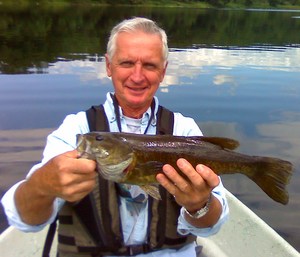 On spin tackle or on a fly rod the smallmouth is inch for
inch and pound for pound, the sportiest fish in freshwater. As soon as they're
hooked a smallmouth lets off with an exciting series of runs and jumps, fighting
against the rod and giving the impression that it's a far bigger fish than it
is.
On spin tackle or on a fly rod the smallmouth is inch for
inch and pound for pound, the sportiest fish in freshwater. As soon as they're
hooked a smallmouth lets off with an exciting series of runs and jumps, fighting
against the rod and giving the impression that it's a far bigger fish than it
is.Our Full Day guided Smallmouth trips are for up to 2 people, 8+ hours, snacks, soft drinks, and lunch included.
Call us today and get in on
the fun!
914-475-6779 or 607-241-7000
914-475-6779 or 607-241-7000
Capt. Joe Demalderis
2010 Orvis Endorsed Fly Fishing Guide of the Year
http://www.flyfishthedelaware.com/
Saturday, July 07, 2012
American Rivers launches The Anglers Fund, to connect anglers with river conservation
A new initiative launched by American Rivers, the nation’s leading
river conservation organization, is engaging anglers across the country
in the effort to protect and restore rivers.
Healthy rivers and clean water are essential to healthy fish and good fishing. The Anglers Fund supports American Rivers’ work to improve river health and fishing by removing obsolete dams, improving operations of existing dams, and safeguarding rivers with Wild and Scenic designations. Members of The Anglers Fund contribute $1000 or more annually.
“Anglers have a unique and powerful connection to rivers. Whether casting to steelhead in the Pacific Northwest, cutthroat trout in the Rockies, Atlantic salmon in Maine, stripers in the Chesapeake Bay, or smallmouth bass in the Southeast, the beauty and magic of each fishing experience begins with healthy rivers,” said Bob Irvin, president of American Rivers.
Recent successes for river and fish conservation spearheaded by American Rivers include the removal of dams on Washington’s Elwha and White Salmon rivers, Maine’s Penobscot River, and Maryland’s Patapsco River, along with Wild and Scenic designations for 400 miles of the Snake River and its tributaries surrounding Jackson, Wyoming. Additional successes have come in the form of hundreds of dams removed in the Northeast, hundreds of miles of improved fish habitat from reformed dam operations in the Southeast, and over 100 miles of habitat restored for steelhead and salmon in California.
Anglers Fund members receive a variety of benefits including exclusive opportunities to join American Rivers conservation experts on special fishing excursions, as well as briefings on fisheries conservation work.
Donations can be made by phone, using a major credit card (call American Rivers at 877-347-7550); by mail (send contribution to: American Rivers Anglers Fund, 1101 14th Street NW, Suite 1400, Washington DC, 20005); or securely online at www.AmericanRivers.org/AnglersFund.
American Rivers is the leading organization working to protect and restore the nation’s rivers and streams. Rivers connect us to each other, nature, and future generations. Since 1973, American Rivers has fought to preserve these connections, helping protect and restore more than 150,000 miles of rivers through advocacy efforts, on-the-ground projects, and the annual release of America’s Most Endangered Rivers®.
Headquartered in Washington, DC, American Rivers has offices across the country and more than 100,000 supporters, members, and volunteers nationwide. Visit www.americanrivers.org, www.facebook.com/americanrivers and www.twitter.com/americanrivers.
Healthy rivers and clean water are essential to healthy fish and good fishing. The Anglers Fund supports American Rivers’ work to improve river health and fishing by removing obsolete dams, improving operations of existing dams, and safeguarding rivers with Wild and Scenic designations. Members of The Anglers Fund contribute $1000 or more annually.
“Anglers have a unique and powerful connection to rivers. Whether casting to steelhead in the Pacific Northwest, cutthroat trout in the Rockies, Atlantic salmon in Maine, stripers in the Chesapeake Bay, or smallmouth bass in the Southeast, the beauty and magic of each fishing experience begins with healthy rivers,” said Bob Irvin, president of American Rivers.
Recent successes for river and fish conservation spearheaded by American Rivers include the removal of dams on Washington’s Elwha and White Salmon rivers, Maine’s Penobscot River, and Maryland’s Patapsco River, along with Wild and Scenic designations for 400 miles of the Snake River and its tributaries surrounding Jackson, Wyoming. Additional successes have come in the form of hundreds of dams removed in the Northeast, hundreds of miles of improved fish habitat from reformed dam operations in the Southeast, and over 100 miles of habitat restored for steelhead and salmon in California.
Anglers Fund members receive a variety of benefits including exclusive opportunities to join American Rivers conservation experts on special fishing excursions, as well as briefings on fisheries conservation work.
Donations can be made by phone, using a major credit card (call American Rivers at 877-347-7550); by mail (send contribution to: American Rivers Anglers Fund, 1101 14th Street NW, Suite 1400, Washington DC, 20005); or securely online at www.AmericanRivers.org/AnglersFund.
American Rivers is the leading organization working to protect and restore the nation’s rivers and streams. Rivers connect us to each other, nature, and future generations. Since 1973, American Rivers has fought to preserve these connections, helping protect and restore more than 150,000 miles of rivers through advocacy efforts, on-the-ground projects, and the annual release of America’s Most Endangered Rivers®.
Headquartered in Washington, DC, American Rivers has offices across the country and more than 100,000 supporters, members, and volunteers nationwide. Visit www.americanrivers.org, www.facebook.com/americanrivers and www.twitter.com/americanrivers.
Wednesday, May 23, 2012
FREE Fly Fishing Clinics
Fly Fishing 101—Learn the basics;
Fly Fishing 201—Chance to catch your first fish on a fly!
SUNDERLAND, VT (Spring 2012) – From
May through July, Orvis will offer free fly fishing lessons nationwide
through Orvis retail stores and participating dealers (www.orvis.com/ff101).
This season Orvis hopes to introduce even more outdoor lovers to the
sport with Fly Fishing 101 and 201 beginning in May 2012. Classes are complimentary to the public and a great way for families and friends to enjoy the outdoors together.
“The
past two years' success of Fly Fishing 101 is truly amazing and
encouraging,” explains Tom Rosenbauer, Marketing Director of The Orvis
Company. “Based on the success of the program, we've been delighted to
welcome many thousands of novice and advancing students to the joys of
fly fishing through Fly Fishing 101 and 201. Our goal is to encourage
people of all ages and backgrounds to come learn more about the
fascination of fly fishing. The classes are unique opportunities to
enjoy a new sport and the success of the program speaks volumes to what
folks are seeking in terms of healthy outdoor recreational activities
for themselves and their families.”
Trout Unlimited and the Federation of Fly Fishers (FFF) will be lending
their support again this year with volunteers at the event and free
memberships to their organization for attendees of the class.
Fly Fishing 101/201 Highlights --
The 101 course will consist of two parts—one hour of casting
instruction and one hour of rigging. Most participants are true
beginners so keeping the focus on learning these basic skills is the
best place to start. FF201 classes are conducted on the water, with a
lower instructor/student ratio. The main thrust of the 201 course is
getting those interested in taking the next step in fly fishing on the
water at a local location where they have a great chance at catching
their first fish. Private water, local bass/bluegill ponds, or a
recently stocked river or creek are typical class sites.
Once instruction is completed,
each group attendee will receive a $25 coupon off any purchase of $50 or
more and other coupons good toward Orvis gear. Additionally, each group
attendee will receive a certificate for a FREE Trout Unlimited
membership and a FREE membership to the Federation of Fly Fishers—a $70
value. The total free package value including the instruction is valued
at over $150.
To get started in fly fishing and to make it more accessible
to start in the sport, participants will also receive discounted offers
on a fishing lanyard with tools and a beginner's rod outfit—all the
basics needed to hit the water after the class.
Event Dates (exact times determined by store):
| Fly Fishing 101 |
|
||
|
Saturday, May 26 Sunday, May 27 |
Saturday, June 2 Sunday, June 3 Saturday, June 16 Sunday, June 17 Saturday, June 23 Sunday, June 24 |
||
| Fly Fishing 201 | |||
|
Saturday, June 9 Sunday June 10 |
Sunday, July 1 | ||
Founded in 1856, Orvis pioneered the mail order industry in the United States, operates more than 80 retail stores in the U.S. and the U.K. including its Flagship store in Manchester, VT; and maintains a network of over 400 dealers worldwide. Orvis donates five percent of pre-tax profits each year to protecting nature. You can read more about Orvis on their website at www.orvis.com
Visit www.orvis.com/ff101 for a full listing of participating stores/dealers.
Subscribe to:
Posts (Atom)