

The New Jersey Division of Fish and Wildlife will have a new tool to
use in its ongoing efforts to enforce wildlife laws as the state joins
the Interstate Wildlife Violator Compact, Department of Environmental
Protection Commissioner Bob Martin announced today.
The compact, first developed in western states in the
mid-1980s, recognizes the importance of deterrence through the
suspension of hunting, fishing, and trapping licenses and privileges in
all member states resulting from violations concerning the pursuit,
possession or taking of a wide range of wildlife, including mammals,
birds, fish, reptiles, amphibians, mollusks, shellfish, and
crustaceans. New Jersey’s membership will begin on December 1.
“This cooperative and proactive interstate strategy will greatly
enhance our Division of Fish and Wildlife’s ability to protect and
manage our wildlife resources,” said Commissioner Martin. “Any person
who has their license privileges suspended in one member state may now
also have them suspended in all other member states. In addition, the
compact prevents convicted poachers who are under revocation in one
state from hunting, fishing, or trapping in other states.”
For the purposes of the compact, the term “license”
means any license, permit, or other public document which conveys to
the person to whom it was issued the privilege of pursuing, possessing,
or taking any wildlife regulated by statute, law, regulation,
ordinance, or administrative rule of a participating state.
In New Jersey this definition includes but is not
limited to: all-around sportsman, firearm hunting, trapping, bow and
arrow, freshwater fishing, recreational crab pot, non-commercial crab
dredge and shellfish licenses, various hunting and trapping permits,
pheasant & quail and New Jersey waterfowl stamps, striped bass
bonus tags, and saltwater registry certificates.
License and privilege suspensions resulting from
wildlife violations committed on or after December 1, 2017 in New
Jersey may result in the reciprocal suspension of license privileges in
member states. If a person plans to hunt, fish, or trap in another
state, and has a license privilege suspension in New Jersey, it is
their responsibility to contact the other state to verify if they may
legally hunt, fish, or trap there.
New Jersey residents who fail to comply with the terms
of a citation or summons issued for a wildlife violation in another
member state may face a $50 fine and the suspension of all privileges
to take or possess wildlife in New Jersey until the citation has been
satisfied. Failing to appear in court or to otherwise answer a ticket or
summons issued for such violations will also result in license,
permit, and privilege suspension.
“Our agency has been charged with managing New Jersey’s
wildlife resources for 125 years and we take this responsibility very
seriously,” said Division of Fish and Wildlife Director Larry
Herrighty. “Joining the compact protects New Jersey’s wildlife
resources and that of member states by deterring violators from
continuing their illegal activities and sends a clear message to all
that such behavior will not be tolerated.”
The concept of a wildlife violator compact was first
advanced in the early 1980s by member states in the Western Association
of Fish and Wildlife Agencies. In 1985 draft compacts were developed
independently in Colorado and Nevada. Subsequently, these drafts were
merged and the Interstate Wildlife Violator Compact was created.
More information on the Compact, including which states are members and
which violations with prescribed suspensions will be recognized in New
Jersey and shared with member states is available on the Division of
Fish and Wildlife website at: www.njfishandwildlife.com/violators_compact.htm
Popular Posts
-
 In its simplest form, etiquette is nothing more than doing the right thing at the right time for a particular situation. Some of these ru...
 -
WASHINGTON – The U.S. Environmental Protection Agency (EPA) is launching a web-based discussion forum to gather public input on how the...
-
ASMFC Atlantic Menhaden Board Initiates Addendum to Increase Abundance and Spawning Stock Biomass Arlington, VA – The Commission’s Atlanti...
-
Alexandria, VA – The Commission’s Atlantic Striped Bass Management Board has initiated development of Draft Addendum III with the goals of r...
-
When you hire a guide on the Upper Delaware or anywhere else, don't make assumptions, check to see if your guide is licensed. On the...
-
Beginning February 1, 2014 the New York State Department of Environmental Conservation (DEC) is decreasing sporting license fees. This pric...
-
 It’s been an excellent water year so far and that's resulted in some very good drift boat fishing on the Upper Delaware. The Main Ste...
 -
Bill confirms outdoor recreation industry is a significant economic drive The bill, known as the Outdoor REC Act, passed the House...
-
 Summer Trout Fishing on the Upper Delaware River It’s been an excellent water year so far and that's resulted in some very good fish...
 -
Low, turbid water poses a risk to spawning trout Anglers: please don't fish the Esopus Creek from the Shandaken Portal to the Asho...
Monday, November 27, 2017


Tuesday, November 21, 2017
New York DEC Announce $50,000 to Study Livingston Manor Flooding
Flood Study Could Help Advance Resiliency Projects
New York State Department of Environmental Conservation (DEC) Commissioner Basil Seggos announced that the State will provide up to $50,000 for a U.S. Army Corps of Engineers study in the Sullivan County hamlet of Livingston Manor. Funds will be used to undertake the Livingston Manor Flood Control Feasibility Study. The funding was secured with assistance from Assemblywoman Aileen Gunther."As climate change fuels more intense and frequent storms that threaten communities and infrastructure across the state, DEC experts are on the frontlines everyday assisting local governments in planning for and advancing important flood resiliency projects," said DEC Commissioner Basil Seggos. "The Livingston Manor Flood Control Feasibility Study will not only protect this community, it will also improve the natural resources in the Catskills, which are critical to the economic vitality of the region."
"The people who live in Livingston Manor have worked so hard to rebuild and repair flood damage time and time again," Assemblywoman Gunther said. "This study will help find a solution that works for everyone."
"It is with great satisfaction and anticipation that we have been waiting for such needed support from our state agencies. I can't say enough about our Assembly Women Aileen Gunther, who has witnessed first-hand, the devastation of flooding to our communities. Time and time again. We have been working with the ACOE and the DEC for some time now to develop a plan to reduce flooding in our area. Our small town atmosphere is a driving force for many new businesses, and the assistance from our state agency will help bring about positive change, and continued growth for those who look for a more healthy lifestyle and quality of life," said Rob Eggleton, Supervisor, town of Rockland.
A joint effort by the U.S. Army Corps of Engineers, DEC, the town of Rockland, the Livingston Manor Flood Control Feasibility Study was originally initiated in 2009. In 2016, the study was re-envisioned to focus solely on flood control, which required additional funding. In October 2017, DEC committed to providing up to $50,000 to finalize the study.
DEC is currently working with the U.S. Army Corps to finalize a contract for the project. The study is anticipated to be completed in 2018. Following completion of the study, the U.S. Army Corps will begin the design and construction phase of the project with federal, State and local funding.
Saturday, November 18, 2017
NYC DEP Statement on the Long-term Agreement for Delaware River Flow Management Program
The New York City Department of Environmental Protection released the following statement from Deputy Commissioner Paul Rush.
“New York City is pleased that the Decree Parties today committed to a long-term agreement that balances the myriad interests connected to the Delaware River. The 10-year program protects public health for millions of Americans by sustaining their supplies of high-quality drinking water. The agreement also expands efforts to enhance flood attenuation and support the outdoor recreation economy of the upper Delaware River through the protection of its natural ecology and wild trout fishery.
“Importantly, the new agreement was built upon untold hours of scientific work and data analyses that aimed to advance the interests of all stakeholders without detriment to any of them.
“That work does not end here. The new agreement requires the Decree Parties to pursue a number of scientific studies related to salinity intrusion in the lower Delaware River, the calculation of water available to be released downstream of New York City’s reservoirs, and other topics related to the natural resources of the basin.
“New York City will approach the work ahead with the same spirit of collaboration that yielded the new flow-management program today.”
More information about the Flexible Flow Management Program will be available on the website of the Office of the Delaware River Master.
Friday, November 10, 2017
Record Number of Americans Support Menhaden Protection
150,000 Public Comments in Support of Menhaden Protection Announced; Most Public Comments Ever Delivered to ASMFC!
(New York, NY Nov. 10, 2017) A record number of Americans are urging the Atlantic States Marine Fisheries Council (ASMFC) to support protection of Atlantic Menhaden in their upcoming decision. Over 150,000 Americans sent public comments in favor of strong Menhaden protections during the recently completed public comment period. The ASMFC will meet November 14th to decide on Amendment 3—a proposal to provide stronger protections for Atlantic Menhaden that takes into consideration the important role the “most important fish in the sea” plays as both a source of food for other species and filterer of water.
“From striped bass anglers and fishing captains to whale watchers and bird enthusiasts, the varying interests across the east coast that support managing menhaden to account for their importance to ocean ecosystems shouldn’t come as a surprise. Anyone who pays close attention to life in the water has seen first-hand just how important this fish is, and wants to see the species conservatively managed,” said Zach Cockrum, Northeast Regional Representative for the National Wildlife Federation.
The Commission’s Atlantic Menhaden Management Board will meet November 13‐14, 2017 to consider approval of Amendment 3 to the Interstate Fishery Management Plan for Atlantic Menhaden and set specifications for the 2018 fishing season.
Atlantic menhaden (Brevoortia Tyrannus) play a central role in the ecological and economic vitality of the Atlantic coastal ecosystem as an essential food for whales as well as important commercial and game fishes (striped bass, bluefin tuna, bluefish, weakfish, tarpon, sharks), and a host of other marine wildlife. Menhaden play a key role in the regulation of regional water quality by filtering phytoplankton; its food source and a major cause of algae blooms and brown tides.
Tuesday, October 10, 2017
101.6 Million Americans Participated in Hunting, Fishing & Wildlife Activities
U.S. Fish and Wildlife Service Survey Preliminary Findings Show Importance of Increasing Access to Public Lands
T he U.S. Department of the Interior announced a new report by the U.S.
Fish and Wildlife Service that shows that 101.6 million Americans—40
percent of the U.S. population 16 years old and older—participated in
wildlife-related activities in 2016, such as hunting, fishing and
wildlife-watching.
“This report absolutely underscores the need to increase public access to public lands across the United States,” said U.S. Secretary of the Interior Ryan Zinke. “Hunting and fishing are a part of the American heritage. As a kid who grew up hunting and fishing on public lands who later took my own kids out on the same land, I know how important it is to expand access for future generations. Many folks east of the Mississippi River rely on friends with large acreages or pay high rates for hunting and fishing clubs. This makes access to wildlife refuges and other public lands more important.”
On his first day in office, Secretary Zinke reversed an order that would have banned lead ammo and fishing tackle on National Wildlife Refuge lands, and he began the process of expanding hunting and fishing opportunities on public lands across the Department.
In August, the Secretary announced a proposal to expand hunting and fishing opportunities at 10 national wildlife refuges, and he announced the initial stages of a plan to acquire land to make the Bureau of Land Management Sabinoso Wilderness Area accessible for the first time ever to hunters, hikers and wildlife watchers.
In addition, Secretary Zinke recently made recommendations to President Trump on 27 national monuments that call for changes to some that, while still protecting the land, would also protect and expand public access to that land for citizens who want to hunt, fish and hike and experience the joy and beauty of these special places.
The survey, the 13th in a series conducted nearly every five years since 1955, shows that the most substantial increases in participation involve wildlife-watching—observing, feeding and photographing wildlife. The report indicates these activities surged 20 percent from 2011 to 2016, from 71.8 million to 86 million participants during that time. Expenditures by wildlife watchers also rose sharply—28 percent—between 2011 and 2016, from $59.1 billion to $75.9 billion. Around-the-home wildlife-watching increased 18 percent from 2011, from 68.6 million in 2011 to 81.1 million participants in 2016. More modest gains were made for away-from-home wildlife watchers: 5 percent increase from 2011 to 2016, from 22.5 million to 23 million participants.
More Americans also went fishing. The report indicates an 8 percent increase in angling participation since 2011, from 33.1 million anglers to 35.8 million in 2016. The greatest increases in participation—10 percent—were seen in the Great Lakes area. Total expenditures by anglers nationwide rose 2 percent from 2011 to 2016, from $45 billion to $46.1 billion.
Hunting participation dropped by about 2 million participants but still remained strong at 11.5 million hunters. Total expenditures by hunters declined 29 percent from 2011 to 2016, from $36.3 billion to $25.6 billion. However, expenditures for related items such as taxidermy and camping equipment experienced a 27-percent uptick, and hunting trip-related expenses increased 15 percent.
Regarding the decrease in participation in hunting, Zinke said: “Hunters and anglers are at the backbone of American conservation, so the more sportsmen and women we have, the better off our wildlife will be. Some of our wildlife refuges have great mentored hunting programs. I'd like to see these programs replicated and expanded across the country and reach into areas where kids don't traditionally get the opportunity to hunt, fish and? ?connect with wildlife. Some of my best family time growing up and raising my own kids was hunting an elk, enjoying a pheasant, or reeling in a rainbow. These are the memories and traditions I want to share with future generations.”
“No one does more for our wildlife and or wild places than hunters. Any decline in hunting numbers, real or perceived, is of great concern since hunting provides the lion’s share of funding for nationwide conservation work thanks to excise taxes on firearms, ammunition and archery equipment that garner more than $1.6 annually,” said David Allen, Rocky Mountain Elk Foundation president and CEO. “The RMEF remains committed to growing and ensuring the future of our hunting heritage as well as elk, other wildlife and their habitat.”
This year’s survey also gathered two new categories of data: archery and target shooting. Findings show there are more than 32 million target shooters using firearms and 12.4 million people engaged in archery, not including hunting.
“Hunters and anglers form the foundation of wildlife conservation in the United States, consistently generating more funding for habitat and wildlife management than any other source,” said U.S. Fish and Wildlife Service Principal Deputy Director Greg Sheehan. “Industry, federal and state fish and wildlife agency initiatives that focus on hunter and angler recruitment, retention and reactivation are crucial to sustaining these conservation dollars and ensuring the next generation of wildlife enthusiasts have the opportunity, access and awareness to pursue these time-honored American traditions.”
“I praise Secretary Zinke for his support of hunting and land access. The hunting and shooting sports community is grateful for an administration that recognizes the economic, recreational and traditional values of hunting and target shooting," said John Frampton, President and CEO of the Council to Advance Hunting and the Shooting Sports. "Although the numbers of hunters have declined, we are optimistic they will rebound as a result of Secretary Zinke's leadership, state wildlife agencies, non-government organizations and industries working together. Hunting in this country is not only part of our national heritage, it is an important to our country’s economy, as indicated by the expenditures in the survey.”
As a partnership effort with states and national conservation organizations, the survey has become one of the most important sources of information on fish and wildlife recreation in the United States. Federal, state and private organizations use this detailed information to manage wildlife, market products, and look for trends. Conducted by the U.S. Bureau of the Census, the survey is based on a 22,416-household sample surveyed through computer-assisted telephone and in-person interviews.
For more information about the survey and to view the preliminary report, please visit https://wsfrprograms.fws.gov/Subpages/NationalSurvey/National_Survey.htm
Friday, October 06, 2017
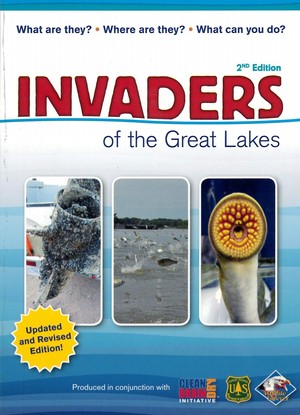
New Invaders Found in Pocket Field Guide
The Clean Drain Dry Initiative
(CD2), in partnership with the U.S. Forest Service, U.S. Fish and
Wildlife Service, National Professional Anglers Association and the
Great Lakes Commission, printed over 10,000 copies for distribution
throughout the Great Lake states. Since 2013, 57,000 copies have been
printed and distributed through Wildlife Forever’s national partnership
network.
White Bear Lake, MN - Wildlife Forever is proud to release the second edition of Invaders of the Great Lakes. The highly popular field guide booklet has been a powerful tool to help identify invasive species and prevent their spread. This edition features new species such as Starry Stonewort and European Buckthorn, both highly destructive to fish and wildlife habitat.
“New species continue to invade and threaten our nation’s resources. We felt it was critical to highlight these new invaders to help educate and inform recreational users of the need for Clean Drain Dry prevention,” said Pat Conzemius, Conservation Director for Wildlife Forever.
Targeting anglers, boaters and hunters to prevent invasive species remains the most cost-effective means for slowing the spread. Resources such as the Invader book and CD2’s comprehensive media and marketing approach, are fundamental to implementing on-the-ground behavior change. Unfortunately, funding cuts to educational programs like the CD2 threatens to erase nearly a decade of educational efforts and progress made through the Great Lakes Restoration Initiative. Concerned sportsment and women are encouraged to contact their natural resource agency and managers to voice support of invasive species conservation education.
The Clean Drain Dry Initiative™ is the national campaign to educate outdoor recreational users on how to prevent the spread of invasive species. Coordinated messaging drives best management practices content, marketing communications and tools on how to prevent. To learn about services available and how you can participate, contact Pat Conzemius, PConzemius@WildlifeForever.org or visit www.CleanDrainDry.org.
Wildlife Forever (WF): Wildlife Forever’s mission is to conserve America's wildlife heritage through conservation education, preservation of habitat and management of fish and wildlife. For 30 years, WF members have helped to conduct thousands of fish, game and habitat conservation projects across the country. Recent audit results reveal a 94% to mission rating. To join and learn more about the award-winning programs, including work to engage America’s youth, visit www.WildlifeForever.org.
Why Aren’t Millennials Buying Boats?
 Both boaters and those who rely on boating to make a living lament
that there doesn’t seem to be as many younger boaters these days. The
statistics back that up. According to the recently published BoatUS Magazine feature “Why Aren’t Millennials Buying Boats?”
(October 2017), approximately 41 percent fewer 20- to 39-year-olds
owned boats in 2015 than in 2005. And while millennials may boat about
as much as their parents did, the data confirms they are far less likely
to own a boat.
Both boaters and those who rely on boating to make a living lament
that there doesn’t seem to be as many younger boaters these days. The
statistics back that up. According to the recently published BoatUS Magazine feature “Why Aren’t Millennials Buying Boats?”
(October 2017), approximately 41 percent fewer 20- to 39-year-olds
owned boats in 2015 than in 2005. And while millennials may boat about
as much as their parents did, the data confirms they are far less likely
to own a boat.
Why? Author and millennial Fiona McGlynn, who is a professional management consultant, may have some answers.
Lower incomes, student debt, lack of technical knowledge or mechanical experience, and a culture shift that eschews conventional ownership in favor of renting take their toll on millennial (born between 1982 and 2000) boat ownership. “Young people are not giving up on boating, just going about it in a different way: chartering, borrowing, and riding along,” says McGlynn, a live-aboard who recently finished her first South Pacific crossing along with her husband, Robin.
While owning a boat can be pricey, McGlynn reports, “I’ve met a number of young boaters finding creative ways to get out on the water without breaking the bank, such as millennials who are participating in cooperatives, who share a boat among friends, or who live aboard a boat instead of renting pricey apartments in major American waterfront cities. Several boaters interviewed for the story mentioned the increasing popularity of wake boats, in part because they carry more people and they’re fun.”
McGlynn ultimately writes that, in general, millennials prefer the sharing economy. She asks, why would you buy a ski house, when all you have to do is Airbnb it? She suggests it’s the same with boats. “20- to 39-year-olds love boating for the same reasons their parents did. They see it as an opportunity to socialize, create family memories, and adventures, and unplug from work. Boating has the potential for a watershed moment among millennials.”
The BoatUS Magazine feature also includes creative tips on how young people with no boating, sailing, or fishing experience can get on the water.
For the full story, go to BoatUS.com/millennials
Thursday, July 27, 2017
Fishing Participation up 1.5 Million According to 2017 Special Report on Fishing
Report also reveals participation trends and motivating factors
The Recreational Boating & Fishing Foundation (RBFF) today
announced the release of its 2017 Special Report on Fishing. Most
significantly, the report shows fishing participation has increased by
1.5 million over the previous year. Additionally, several trends and participation increases among key segments are highlighted in
the report.
- Fishing is still the number two adult outdoor activity, but it's gaining ground on jogging
- 2.5 million participants tried fishing for the very first time
- New participants accounted for 5.3% of the total participant base and tended to be young and female
- 3.8 million Hispanics participated in fishing (an 11% increase)
- Hispanic anglers go on 6 more outings per year than their general market peers
- Youth participation increased 3% to 11 million total participants
- Americans took 855 billion total fishing trips, equating to 18.8 trips per participant
"These findings energize us and provide some validation for the work we are doing on a daily basis," said RBFF President and CEO Frank Peterson. "Our efforts to recruit new audiences and bring families to the water are certainly paying off. 60 in 60 is off to a great start, and effective R3 (recruitment, retention and reactivation) programs will only grow the participant base and secure funding for conservation programs for years to come."
The Special Report on Fishing is the product of a partnership between RBFF and the Outdoor Foundation and looks into participation trends, barriers to entry, motivating factors and preferences of key groups of anglers.
"Research shows that fishing is an essential piece of America's outdoor tradition, and it often leads children to pursue outdoor activities and healthy living into adulthood," said Ivan Levin, deputy director of the Outdoor Foundation. "This report aims to help the fishing industry, and the entire outdoor industry, understand fishing participation in order to engage even more people in recreational fishing and create the next generation of lifelong anglers and outdoor enthusiasts."
The full report and an accompanying infographic is available in the RBFF Resource Center.
NY DEC Confirms First Infestation of Hemlock Woolly Adelgid in Adirondacks
A minor infestation of the Hemlock Woolly Adelgid (Adelges tsugae)
was confirmed on Forest Preserve lands in the town of Lake George in
Warren County on July 18, the New York State Department of Environmental
Conservation (DEC) announced. This is the first known infestation
of Hemlock Woolly Adelgid (HWA) in the Adirondacks.
"To track and prevent the spread of this invasive pest, Hemlock Woolly Adelgid, DEC has surveyed 250 acres of forest in the Adirondacks," said DEC Commissioner Seggos. "Preventing the spread of invasive species is the most effective way to fight and address the damage these species can cause to our natural resources. DEC encourages hikers, campers, boaters, sportsmen, and others recreating on or along forestlands in northern Schenectady, Saratoga, and southern Warren counties to check Eastern Hemlock trees and report any HWA infestations."
A small cluster of early stage HWA was detected on one branch of an old-growth Eastern hemlock tree on Prospect Mountain during a field trip by a Senior Ecologist from the Harvard Research Forest.
NYDEC immediately dispatched a survey crew to the site and was joined by staff from Cornell University's New York State Hemlock Initiative. HWA was located and confirmed on a number of branches on the tree by a Cornell scientist and later by DEC's DEC Diagnostic Lab. The mature tree had no visible sign of crown thinning.
The crews surveyed 250 acres of forest and found only one other tree, a small Eastern hemlock near the original infested tree, that contained one branch with a small cluster of early stage HWA.
This is the first recorded infestation of this invasive, exotic pest in the Adirondacks. Previously, it has been detected in 29 other counties in New York, primarily in the lower Hudson Valley and, more recently, in the Finger Lakes region. Seventeen other states along the Appalachian Mountain range from Maine to Georgia also have HWA infestations. HWA is a listed prohibited species under DEC's invasive species regulations.
DEC is evaluating means to eradicate this infestation and prevent it from spreading. This will not include cutting down trees, which is not an effective means for controlling HWA as it is with other invasive forest pests.
The most effective treatment method for control of HWA is the use of insecticides. The insecticide is applied to the bark near the base of the hemlock tree and are absorbed and spread through the tissue of the tree. When HWA attaches itself to tree to feed, it receives a dose of the pesticide and is killed.
In the past three years DEC has treated infested hemlock trees with insecticides at a few select locations where the control is likely to slow the spread of HWA, or where the hemlocks provide a significant public value. New York State Office of Parks, Recreation, and Historic Preservation has treated many hemlocks trees at a number of State Parks. Both chemical and biological control options are important in the long-term fight against HWA.
Dispersal and movement of HWA occur primarily during the first life stage ("crawler") as a result of wind and animals that come in contact with the sticky egg sacks and crawlers. Isolated infestations and long-distance movement of HWA, most often occur as the result of people transporting infested nursery stock.
DEC monitors the distribution and spread of HWA by annual aerial and ground surveys as well as reports from partners and the general public. DEC has been involved in biological control efforts against HWA since the 1990s, and has released several approved natural enemies of HWA at locations in the Finger Lakes and Catskills regions.
HWA, a tiny insect from East Asia first discovered in New York in 1985, attacks forest and ornamental hemlock trees. It feeds on young twigs, causing needles to dry out and drop prematurely and causing branch dieback. Hemlock decline and mortality typically occur within four to 10 years of infestation in the insect's northern range.
Damage from the insect has led to widespread hemlock mortality throughout the Appalachian Mountains and the southern Catskill Mountains with considerable ecological damage, as well as economic and aesthetic losses. HWA infestations can be most noticeably detected by the small, white, woolly masses produced by the insects that are attached to the underside of the twig, near the base of the needles.
Eastern hemlock trees, which comprise approximately 10 percent of the Adirondack forest, are among the oldest trees in New York with some reaching ages of more than 700 years. They typically occupy steep, shaded, north-facing slopes and stream banks where few other trees are successful. The trees help maintain erosion control and water quality, and the hemlock's shade cool waters providing critical habitat for many of New York's freshwater fish, including native brook trout.
Survey efforts by DEC and Cornell's New York State Hemlock Initiative will continue to determine if other infestations are present in the surrounding area. As the closest known infestation of HWA is 40 miles away in Schenectady County, DEC is asking hikers, campers, boaters, sportsmen, and others recreating on or along forestlands in northern Schenectady, Saratoga, and southern Warren counties to check Eastern Hemlock trees and report any HWA infestations.
New York is particularly vulnerable to invasive species due to its rich biodiversity and role as a center for international trade and travel. Rapid response and control is a critical line of defense in minimalizing the establishment, and ultimately permanently removing, an invasive population.
More information on HWA, including identification, control techniques, and reporting possible infestations can be found at Cornell's New York State Hemlock Initiative (link leaves DEC's website) or DEC's website. You can also call DEC's toll-free Forest Pest Information Line at 1-866-640-0652 to ask questions and report possible infestations.
"To track and prevent the spread of this invasive pest, Hemlock Woolly Adelgid, DEC has surveyed 250 acres of forest in the Adirondacks," said DEC Commissioner Seggos. "Preventing the spread of invasive species is the most effective way to fight and address the damage these species can cause to our natural resources. DEC encourages hikers, campers, boaters, sportsmen, and others recreating on or along forestlands in northern Schenectady, Saratoga, and southern Warren counties to check Eastern Hemlock trees and report any HWA infestations."
A small cluster of early stage HWA was detected on one branch of an old-growth Eastern hemlock tree on Prospect Mountain during a field trip by a Senior Ecologist from the Harvard Research Forest.
NYDEC immediately dispatched a survey crew to the site and was joined by staff from Cornell University's New York State Hemlock Initiative. HWA was located and confirmed on a number of branches on the tree by a Cornell scientist and later by DEC's DEC Diagnostic Lab. The mature tree had no visible sign of crown thinning.
The crews surveyed 250 acres of forest and found only one other tree, a small Eastern hemlock near the original infested tree, that contained one branch with a small cluster of early stage HWA.
This is the first recorded infestation of this invasive, exotic pest in the Adirondacks. Previously, it has been detected in 29 other counties in New York, primarily in the lower Hudson Valley and, more recently, in the Finger Lakes region. Seventeen other states along the Appalachian Mountain range from Maine to Georgia also have HWA infestations. HWA is a listed prohibited species under DEC's invasive species regulations.
DEC is evaluating means to eradicate this infestation and prevent it from spreading. This will not include cutting down trees, which is not an effective means for controlling HWA as it is with other invasive forest pests.
The most effective treatment method for control of HWA is the use of insecticides. The insecticide is applied to the bark near the base of the hemlock tree and are absorbed and spread through the tissue of the tree. When HWA attaches itself to tree to feed, it receives a dose of the pesticide and is killed.
In the past three years DEC has treated infested hemlock trees with insecticides at a few select locations where the control is likely to slow the spread of HWA, or where the hemlocks provide a significant public value. New York State Office of Parks, Recreation, and Historic Preservation has treated many hemlocks trees at a number of State Parks. Both chemical and biological control options are important in the long-term fight against HWA.
Dispersal and movement of HWA occur primarily during the first life stage ("crawler") as a result of wind and animals that come in contact with the sticky egg sacks and crawlers. Isolated infestations and long-distance movement of HWA, most often occur as the result of people transporting infested nursery stock.
DEC monitors the distribution and spread of HWA by annual aerial and ground surveys as well as reports from partners and the general public. DEC has been involved in biological control efforts against HWA since the 1990s, and has released several approved natural enemies of HWA at locations in the Finger Lakes and Catskills regions.
HWA, a tiny insect from East Asia first discovered in New York in 1985, attacks forest and ornamental hemlock trees. It feeds on young twigs, causing needles to dry out and drop prematurely and causing branch dieback. Hemlock decline and mortality typically occur within four to 10 years of infestation in the insect's northern range.
Damage from the insect has led to widespread hemlock mortality throughout the Appalachian Mountains and the southern Catskill Mountains with considerable ecological damage, as well as economic and aesthetic losses. HWA infestations can be most noticeably detected by the small, white, woolly masses produced by the insects that are attached to the underside of the twig, near the base of the needles.
Eastern hemlock trees, which comprise approximately 10 percent of the Adirondack forest, are among the oldest trees in New York with some reaching ages of more than 700 years. They typically occupy steep, shaded, north-facing slopes and stream banks where few other trees are successful. The trees help maintain erosion control and water quality, and the hemlock's shade cool waters providing critical habitat for many of New York's freshwater fish, including native brook trout.
Survey efforts by DEC and Cornell's New York State Hemlock Initiative will continue to determine if other infestations are present in the surrounding area. As the closest known infestation of HWA is 40 miles away in Schenectady County, DEC is asking hikers, campers, boaters, sportsmen, and others recreating on or along forestlands in northern Schenectady, Saratoga, and southern Warren counties to check Eastern Hemlock trees and report any HWA infestations.
New York is particularly vulnerable to invasive species due to its rich biodiversity and role as a center for international trade and travel. Rapid response and control is a critical line of defense in minimalizing the establishment, and ultimately permanently removing, an invasive population.
More information on HWA, including identification, control techniques, and reporting possible infestations can be found at Cornell's New York State Hemlock Initiative (link leaves DEC's website) or DEC's website. You can also call DEC's toll-free Forest Pest Information Line at 1-866-640-0652 to ask questions and report possible infestations.
Tuesday, July 18, 2017
Pennsylvania to Host Wild Trout Summit
The
Pennsylvania Fish and Boat Commission (PFBC) will host a wild trout summit open to the public at its Centre County
regional office on Saturday, Aug. 26 beginning at 9:30 a.m.
“This
is the first time the agency has hosted a meeting to discuss wild
trout,” said Andy Shiels, Director of the PFBC Bureau of Fisheries.
“This will bring agency, academic and Trout Unlimited experts together
to present and discuss the past, present and future of Pennsylvania’s
wild trout resources.”
The
event will be held at the PFBC’s newly renovated Centre Region Office
Building, located at 595 East Rolling Ridge Drive in Bellefonte, PA
16823. This Centre County location can be easily reached via I-99 by
taking the Bellefonte/Route 150 North exit.
Registration will begin at 9:30 a.m. The program will start at 10:15 a.m. and conclude at 4 p.m.
Speakers will present information on the history of wild trout management in Pennsylvania, the Unassessed Wild Trout Waters Initiative, special regulations for wild trout, and how environmental permit review affects wild trout protection.
In
addition, there will be presentations on the potential impacts of
climate change, the PFBC’s wild trout stream habitat improvement
priorities, the Department of Conservation and Natural Resources Wild
Trout Management Plan, and Implications of Genetics on Wild Trout
Management.
New information on several Penn State University trout radio-tracking studies will also be provided.
Finally,
there will a panel discussion at the end of the day to bring the
presenters together for a question and answer session with the
attendees. A tentative agenda can be viewed on the PFBC website.
The Wild Trout Summit is open to the public, but registration is required. Attendees may register online.
“This
will be an informative event and an opportunity for wild trout
enthusiasts and supporters to spend a day learning about a truly unique
Commonwealth aquatic resource,” added Shiels.
Subscribe to:
Posts (Atom)